CompuMark/Clarivate Analytics
CompuMark/Clarivate Analytics
CompuMark/Clarivate Analytics
Overview
The Problem: Internal employees (analysts) were hitting roadblocks when using the company’s proprietary software resulting in decreased efficiency.
Why?: Analysts either had to stay over time to finish their daily quota or did not finish their work. By increasing the analyst’s efficiency, more cases could be completed daily and in a timely manner.
Impact: Our findings, insights, and recommendations kicked off a project within CompuMark that was aimed at significantly improving the proprietary software by the Chief System Architect and the Director of Transformation.
Skills: Contextual Inquiry, Qualitative Analysis, Affinity Mapping
My Role: UX Researcher
Deliverable: A report and presentation containing insights and recommendations.
Overview
The Problem: Internal employees (analysts) were hitting roadblocks when using the company’s proprietary software resulting in decreased efficiency.
Why?: Analysts either had to stay over time to finish their daily quota or did not finish their work. By increasing the analyst’s efficiency, more cases could be completed daily and in a timely manner.
Impact: Our findings, insights, and recommendations kicked off a project within CompuMark that was aimed at significantly improving the proprietary software by the Chief System Architect and the Director of Transformation.
Skills: Contextual Inquiry, Qualitative Analysis, Affinity Mapping
My Role: UX Researcher
Deliverable: A report and presentation containing insights and recommendations.
Overview
The Problem: Internal employees (analysts) were hitting roadblocks when using the company’s proprietary software resulting in decreased efficiency.
Why?: Analysts either had to stay over time to finish their daily quota or did not finish their work. By increasing the analyst’s efficiency, more cases could be completed daily and in a timely manner.
Impact: Our findings, insights, and recommendations kicked off a project within CompuMark that was aimed at significantly improving the proprietary software by the Chief System Architect and the Director of Transformation.
Skills: Contextual Inquiry, Qualitative Analysis, Affinity Mapping
My Role: UX Researcher
Deliverable: A report and presentation containing insights and recommendations.
User Experience Research and Design
Yelp Redesign: Artificial Intelligence
Integrating AI into Yelp to improve customer experience
Figure 12: Final Iteration of "Messaging Yara"
Final Design of Yelp with our recommender algorithm

Final Design of "Messaging Yara" (our recommender algorithm)
Overview
The Challenge
Proposal
Value Proposition
Why?
Skills and Tools
My Role
Will adding an intelligent user interface to Yelp add value for stakeholders? And if so, is it feasible?
Adding an intelligent user interface (IUI) to Yelp’s mobile application is feasible and will add value for stakeholders. An IUI can leverage user’s past transactions and interactions, crowd-sourced data, and the large amount of unstructured data already in Yelp to provide personalized recommendations in a natural and friendly manner.
Instantly provides customers with a short and tailored list of restaurant options, with adequate reasoning, that keep their specific taste requirements in mind.
Adding 'intelligence' to Yelp's interface can:
-
Prevent satisficing and assist in optimal decision making by reducing the cognitive load placed on the users’ working memory.
-
Decrease the time spent searching for a restaurant that meets their needs.
User Interviews, Intelligent Architecture Flow Chart, Wireframing, High-fidelity Prototyping, UXPin
Worked as a UX Researcher and Designer on a team of 3. I conducted 2 user interviews, synthesized the data, and created the intelligent architecture flow chart. I helped with mapping the current user flow and creating the wireframes and high-fidelity prototypes.
Analysis of Yelp

Figure 1: Summary of the problems experienced when using Yelp to locate a restaurant
Understanding the Users
User Interviews
User Insights
-
Users look for and trust recommendations from friends or family
-
They expect personalized search results
-
Scrolling and reading through all the current search results on yelp was described as time-consuming and frustrating.

Figure 2: Quote from Participant #3
Mapping the Current User Flow
User Insights
-
Well-defined goals like restaurant names are handled accurately. However, searching for a dish name, like chimichanga, shows results that may not match the keyword
-
Cuisine searched are handled appropriately, but feeling requests like "spicy" or "breakfasty" are not handled well.
-
Provides results as unstructured data without taking into consideration user's culinary preferences. Thus, a lot of time is spent scanning through all the results to figure out the best option.

Figure 3: Workflow of a customer who does not have the Yelp app installed on their phone.
Impact on Design
Recommendations
-
Add a face to the recommendation algorithm to mimic the feeling users get when a friend recommends them a restaurant.
-
Make it easy to contact their friend,"Yara", through messaging services like WhatsApp, text messages, and Facebook Messenger. Just as you would contact a real friend.
-
Create a recommendation algorithm to provide users with a short, weighted, and tailored list of restaurants can consider their culinary preferences and restrictions.
-
Utilize sentiment analysis, a hybrid recommender system, and contextual and discriminatory models to personalize the experience for users.

Figure 4: Yara, the friendly face of our Intelligent Recommendation Algorithm
Integrating the AI

Figure 5: Intelligent Architecture Flow Chart I created
Prototyping
On-boarding Process

Figure 6: First Iteration of On-boarding Process

Figure 7: Final Iteration of On-boarding Process
Feedback between first and final iteration:
-
The on-boarding process is too long
-
If it is too long, new user's will abandon
-
-
User's will not want to input explicit data to fine tune the algorithm upfront
Fine Tuning the Recommendation Algorithm ("Hanging out with Yara")

Figure 8: First Iteration of Fine-tuning Process
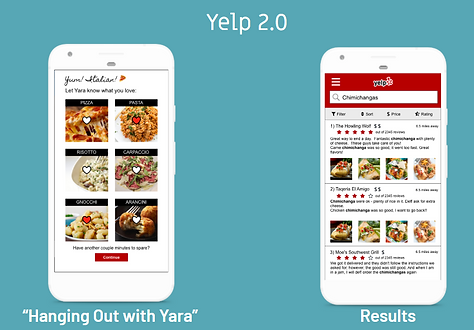
Figure 10: Final Fine-tuning Process and Results Design
Feedback between first and final iteration:
-
Iteration 1 is reminiscent of Tinder and will be tedious
-
Search results should clearly indicate searched word
Messaging Yara (the recommendation algorithm)

Figure 11: First Iteration of "Messaging Yara"

Figure 12: Final Iteration of "Messaging Yara"
Feedback between first and final iteration:
-
"Yara" should have more of a personality in her responses
-
Adding a friendly personality will make users more comfortable with responding back